Chimney, Flashing and Valley Debris on Sevenoaks Roofs
Most roof problems in Sevenoaks do not start in the middle of a tile slope. They start at the junctions: where a chimney stack meets the tiles, where lead flashing bridges two different surfaces, and where two roof planes fold together to form a valley. Moss removal Sevenoaks roofs need most is often concentrated right at these points, because they collect far more debris and hold moisture far longer than the open expanse of a roof slope. This guide looks at why chimneys, flashing and valleys deserve particular attention on Sevenoaks roofs, and what tends to go wrong when they are left unchecked.
The quick answer: chimneys, flashing and valleys collect more moss, leaf litter and debris than the rest of a roof because of their shape and the way water moves around them, and they should be checked and cleared at least as often as the main roof slopes, if not more so.
1. Why Junctions Are the Weak Points on Any Roof
A roof slope is designed to shed water quickly, and in most cases it does exactly that. Junctions are different. Anywhere a chimney rises through the tiles, anywhere flashing bridges two materials, or anywhere two roof planes meet in a valley, water slows down, changes direction or pools briefly before continuing on its way. These are also the exact spots where wind-blown leaves, twigs and moss fragments tend to settle rather than blow straight off.
Across Sevenoaks, where mature trees from Knole Park and the wider Greensand Ridge overhang so many roofs, this combination of slowed water flow and constant organic debris makes junctions the parts of a roof most likely to develop problems first, often well before the main tile slopes show any obvious sign of trouble.
2. Moss Removal Sevenoaks Roofs Need Most Around These Junctions
Moss does not grow evenly across a roof. It tends to establish first, and most thickly, in exactly the places where moisture lingers longest, which usually means the base of a chimney stack, the length of a valley, or the shaded side of a roof near overhanging branches. A roof that still looks reasonably clean across its main slopes can already be carrying a significant moss build-up around these junctions.
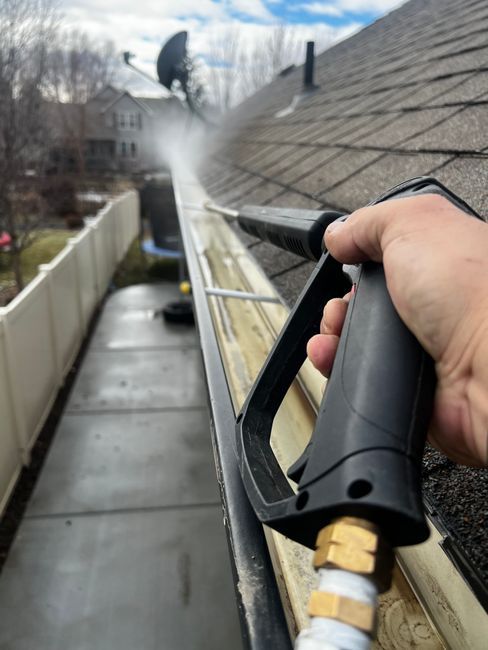
Because these areas sit close to flashing and other weather-critical details, moss removal here needs to be handled carefully. Aggressive scraping or high-pressure washing near flashing can lift or dislodge it, turning a routine clean into a repair job, so this is one part of roof maintenance where a gentle, methodical approach genuinely matters more than speed.
3. Why Chimney Stacks Collect So Much Debris in Sevenoaks
Traditional brick chimney stacks are a common feature on Sevenoaks' many period and Victorian properties, particularly around the town centre conservation areas and villages like Riverhead and Otford. A chimney stack interrupts the flow of wind and water across a roof slope, creating a sheltered pocket on its downwind side where leaves and debris naturally collect.
Over a season or two, this can build into a noticeable pile of decomposing organic matter sitting directly against the base of the stack, holding moisture against both the tiles and the brickwork. Left unaddressed, this damp buildup is exactly the kind of environment moss thrives in, and it sits right next to one of the more vulnerable weatherproofing details on the entire roof.
4. Lead Flashing: What It Does and Why Debris Threatens It
Flashing, usually lead on older Sevenoaks properties, forms the weatherproof seal where a chimney, wall or roof window meets the surrounding tiles. It works by directing water away from the joint rather than sealing it completely, which means it relies on a clear, unobstructed path for water to follow. When leaves, moss and grit build up against flashing, that path gets disrupted, and water can be forced to find another route, sometimes underneath the flashing itself.
This is one of the more common causes of a leak that seems to appear from nowhere. The flashing itself might be in good condition, but debris sitting against it for months or years can be enough to redirect water into the roof structure rather than off it. Regular clearing of debris from around flashing is a simple way to avoid this becoming a bigger problem.
5. Valleys: The Roof's Natural Drainage Channels
A valley, the internal angle where two roof slopes meet, carries more water than almost any other part of a roof, since it collects runoff from both adjoining slopes at once. This makes it naturally prone to silting up with leaf litter, moss fragments washed down from higher up the roof, and general grit, especially on properties with complex rooflines or multiple gables, which are common across Sevenoaks' more architecturally varied streets.
A blocked or partially blocked valley cannot move water as efficiently as it should, and in heavy rain it can back up enough to push water under adjacent tiles rather than carrying it cleanly down to the gutter. Keeping valleys clear is one of the more overlooked but genuinely important parts of routine roof maintenance.
6. What Happens When These Areas Are Left Unchecked
Left for long enough, debris and moss around chimneys, flashing and valleys tends to cause problems that are disproportionate to how small these areas are compared with the rest of the roof. A slow leak that starts at a debris-clogged valley or a compromised flashing joint can travel a surprising distance before it shows up as a visible damp patch on a ceiling, by which point water may have been finding its way in for months.
Because these issues develop quietly and out of sight, they are exactly the kind of problem that benefits from being caught early through regular checks, rather than waiting for a visible sign of trouble inside the house.
7. A Careful, Low-Impact Approach for Period Roofs
Many Sevenoaks properties, particularly those in the district's conservation areas and older Wealden buildings with clay peg tiles, have flashing and roof details that have been in place for decades. A careful, low-impact approach to clearing debris and removing moss around these areas protects both the flashing and the tiles themselves, avoiding the kind of aggressive scraping or pressure washing that can shorten their working life.
Our article on Wealden roofs and clay peg tiles goes into more detail on why these traditional materials need a gentler touch, and the same principle applies directly to the flashing and valleys running through them.
8. When to Get These Areas Checked
Chimneys, flashing and valleys are worth checking at least as often as the rest of the roof, and ideally a little more frequently given how much debris they tend to collect under Sevenoaks' tree cover. A sensible approach is to include a specific check of these junctions whenever the main roof or gutters are cleaned, rather than treating them as a separate task that might otherwise be forgotten.
For a broader view of how often a typical Sevenoaks roof needs attention, our guide on roof cleaning and property value in Sevenoaks covers the wider maintenance picture alongside these more specific problem areas.
- Debris piled against a chimney base , a sheltered spot where leaves and twigs collect and hold moisture against brickwork and tiles.
- Moss growing thickly around flashing , which can gradually lift or dislodge the flashing if left too long.
- A silted or overflowing valley , where water backs up instead of draining cleanly during heavy rain.
- Staining or a damp patch on a ceiling below a chimney breast or roof valley, often the first visible sign of a problem that started weeks or months earlier.
- Grit or moss fragments in the gutter below a valley , showing material is already washing down from a blocked section above.

Because these junctions are small compared with the overall roof but disproportionately important to how well it sheds water, they deserve specific attention rather than being treated as an afterthought during a general clean. A few extra minutes spent clearing a valley or checking around a chimney base can prevent a far more disruptive repair later on.

Frequently Asked Questions
Why do chimneys and valleys get more moss than the rest of the roof?
They collect more debris and hold moisture longer because of their shape, whether that is a chimney creating a sheltered pocket for leaves or a valley channelling runoff from two roof slopes at once.
Can debris around flashing really cause a leak?
Yes. Flashing works by directing water along a clear path, and when debris blocks that path, water can be forced underneath the flashing instead of away from the joint, sometimes leading to a leak that seems to appear without warning.
Is it safe to clear moss from around lead flashing myself?
Working at height near flashing carries real risk, and aggressive cleaning can lift or damage lead work that has been in place for decades. It is generally safer and more reliable to have this done by someone experienced with older roofs.
How much does moss removal around chimneys and valleys cost in Sevenoaks?
It depends on how much debris has built up, how accessible the areas are, and whether it is done alongside a wider roof clean. A site-specific quote is the most reliable way to know, since these details vary a great deal between properties.
How often should valleys and chimney bases be checked?
At least as often as the rest of the roof, and ideally checked specifically each time the roof or gutters are cleaned, since debris collects here faster than on open tile slopes.
Does an older, period roof need extra care around these junctions?
Yes. Traditional lead flashing and clay peg tiles common on Sevenoaks' period properties are more sensitive to aggressive cleaning methods, so a gentler approach protects both the tiles and the flashing itself.
Not sure what's collecting around your chimney or valleys?
Ben's Roof Cleaning has over 15 years of experience clearing moss and debris from roofs across Sevenoaks and the surrounding Wealden villages. Get in touch or call 0173 244 1127
for a free, no-obligation quote.
The Smallest Parts of a Roof Cause the Biggest Problems
Chimneys, flashing and valleys make up a small fraction of any roof's total surface area, yet they are consistently where Sevenoaks' heavy tree cover, wet Kent winters and traditional building details combine to cause the most trouble. Keeping these junctions clear, and treating them with the same care as the rest of a period roof, protects the whole structure far more effectively than focusing on the main tile slopes alone.