How Often Should a Sevenoaks Roof Be Cleaned? A Maintenance Schedule
Ask most homeowners in Sevenoaks when their roof was last cleaned and you will usually get a shrug. Roofs sit above eye level, out of mind, until moss starts falling into the gutters or a damp patch appears on a bedroom ceiling. Regular roof cleaning Sevenoaks homeowners can plan around is not about vanity. It is about catching moss, algae and blocked gutters before they trap moisture against clay tiles and start real damage. This guide sets out a practical schedule for how often a typical Sevenoaks roof needs attention, and why the town's tree cover and older housing stock push some properties toward the shorter end of that schedule.
The quick answer: most Sevenoaks roofs benefit from a full clean every two to three years, with shaded, tree-lined or north-facing roofs needing attention closer to every twelve to eighteen months, and gutters checked at least twice a year regardless of roof condition.
1. Why Roof Cleaning Sevenoaks Follows Its Own Calendar
There is no single national rule for how often a roof should be cleaned, because moss and algae growth depends almost entirely on local conditions. A new-build estate on an open, sunny plot in a different part of the country might go five years without a problem. Sevenoaks is a different case. The town sits on the Greensand Ridge, wrapped by mature woodland, with Knole Park's ancient deer park and its old oaks and beeches forming a green backdrop to much of the town centre and its surrounding roads.
That tree cover is one of the things that makes Sevenoaks such a pleasant place to live, but it also means shade, damp leaf litter and slow-drying roof surfaces are far more common here than in an exposed, open location. Add in a housing stock that includes a good number of Victorian, Edwardian and older Wealden-style properties with steep clay tile roofs, and you have exactly the conditions moss and algae prefer.
2. What Actually Determines How Often a Roof Needs Cleaning
A handful of factors decide where any individual roof sits on the cleaning schedule. Orientation matters a great deal. A north-facing slope that rarely sees direct sun will hold moisture for days after rain, while a south-facing slope on the same house can stay largely moss-free for years. Pitch matters too, since steeper roofs shed water and debris faster than shallow ones.
Tile type plays a role as well. Rougher, more porous clay tiles and traditional peg tiles give moss spores more to grip onto than a smoother concrete or slate surface. Finally, proximity to trees is often the biggest single factor in a town like Sevenoaks. A roof sitting under an overhanging oak or beech will collect leaf litter and stay shaded for long stretches, both of which accelerate moss and algae growth compared with a roof standing clear of the canopy.
3. A General Maintenance Schedule for Sevenoaks Homes
As a starting point, most detached and semi-detached homes in Sevenoaks with a moderate amount of tree cover do well on a two to three year cleaning cycle. This keeps moss from establishing a deep root structure in the tile surface and stops small patches becoming a full covering that holds water against the roof.
Properties with heavier shade, such as homes backing onto woodland near the Greensand Ridge or set close to mature gardens in areas like Riverhead or Kippington, often need a shorter cycle of twelve to eighteen months. On the other end of the scale, a well-exposed, south-facing roof with little nearby tree cover might comfortably stretch to three or even four years between full cleans, provided gutters are kept clear in the meantime.
4. Why Tree Cover on the Greensand Ridge Changes the Timeline
The Kent Downs National Landscape, which includes the Greensand Ridge running through the Sevenoaks district, is defined by its wooded slopes and mixed farmland. Homes built into or close to this landscape inherit both its beauty and its maintenance demands. Overhanging branches drop leaves, twigs and organic debris onto roof surfaces through autumn and into winter, and that debris breaks down into a fine mulch that holds moisture directly against the tiles.
This is different from towns on open, low-lying ground where wind and sun do most of the drying work naturally. In a heavily wooded setting, a roof can stay damp for much longer after a rain event simply because airflow and direct sunlight are both reduced by the surrounding canopy. Over a few seasons, that extra dampness is exactly what allows moss spores to establish and spread across a tile surface.
5. Signs a Roof Needs Cleaning Now, Not Later
A fixed schedule is a useful starting point, but it should always be adjusted against what is actually visible on the roof. Waiting purely for a calendar date to come round can mean missing early warning signs that a roof needs attention sooner.
- Green or black staining on tiles , which usually signals algae rather than moss and tends to spread across a whole slope over time.
- Visible moss cushions or clumps , particularly along tile edges, ridges and valleys where moisture collects longest.
- Moss or grit in the gutters , a strong sign that material is already washing or falling off the roof above.
- Damp patches on ceilings or in a loft space , which can indicate water is being held against the roof structure for longer than it should be.
- Slipped or lifted tiles , which moss roots can gradually work loose over several seasons if left unaddressed.
6. Conservation Areas and Older Housing: Extra Care Is Worth It
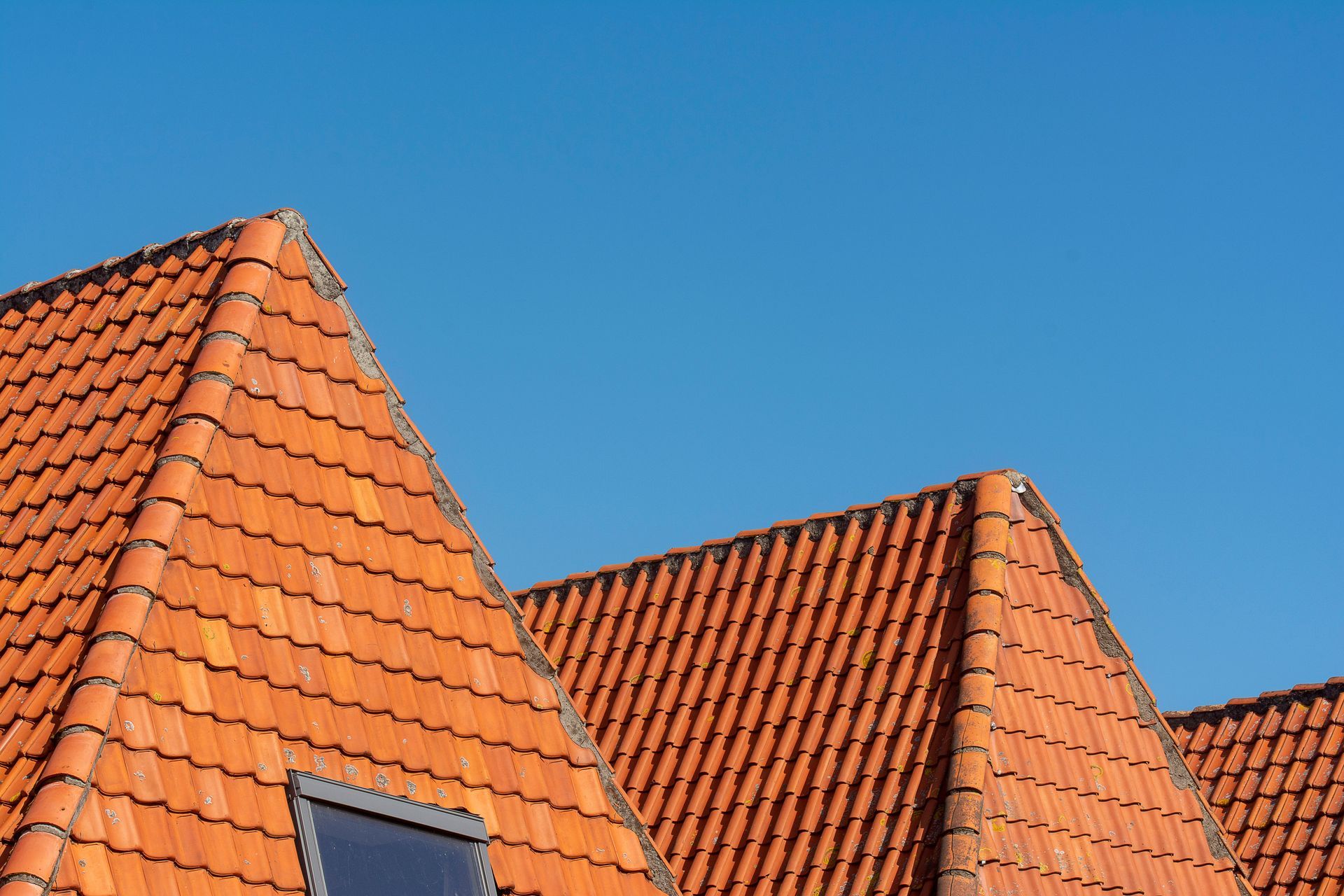
Sevenoaks District Council maintains several conservation areas within the town, including Sevenoaks Weald, Seal and parts of the town centre around the High Street, The Vine and Hartslands. Many of the roofs in these areas use traditional Kent peg tiles, a handmade clay tile that has been part of the local vernacular for centuries and is closely associated with the tile-hung walls seen throughout the Weald.
These older, more porous tiles were never designed to be pressure blasted, and doing so can knock the surface texture off the clay or dislodge tiles that have settled into place over decades. For homes in these areas, sticking closer to the shorter end of the maintenance schedule with a gentler cleaning method protects both the appearance of the property and the character of the tiles themselves, rather than letting moss build up to the point where an aggressive clean becomes the only option.
7. Gutter Cleaning: The Companion Task on Every Schedule
Roof cleaning and gutter cleaning go hand in hand, and one without the other only tells half the story. Even a roof that is not due a full clean for another year can still be shedding moss fragments, leaves and grit into the gutter line every time it rains. In a town with as much tree cover as Sevenoaks, that build-up happens faster than in more exposed locations.
A sensible baseline is to have gutters checked and cleared at least twice a year, typically in late autumn after leaf fall has mostly finished and again in spring once winter debris has settled. Skipping this step is one of the most common reasons homeowners end up with overflowing gutters, damp brickwork or water finding its way behind fascia boards, even when the roof itself still looks reasonably clean.
8. Building a Schedule That Fits Your Specific Roof
The most useful maintenance plan is not a generic one pulled from a national average, but one built around the specific roof in question. That means factoring in orientation, pitch, tile type, how much overhanging tree cover the property has, and whether it sits within one of the district's conservation areas.
For further reading on how the local landscape shapes roof maintenance, see our articles on the Greensand Ridge and heavy tree cover and on Wealden roofs and clay peg tiles, both of which go into more detail on the factors covered here. A short conversation with a local roof cleaner who knows the area's housing stock is usually enough to turn these general guidelines into a schedule that actually fits your home.
Sticking to a schedule, even a loose one, is far more cost-effective over time than reacting only once a problem becomes visible from the street. Moss that has been left to spread for several years is harder and more time-consuming to remove than moss caught in its early stages, and by that point it may have already caused tiles to lift or hold water in ways that shorten their working life.
Frequently Asked Questions
How do I know if my Sevenoaks roof needs cleaning sooner than the general schedule suggests?
Look for green or black staining, visible moss clumps, debris building up in the gutters, or damp patches appearing on ceilings below the roof. Any of these suggest it is worth booking an inspection rather than waiting for a fixed date.
Does a shaded, tree-covered roof really need cleaning that much more often?
Yes. Shade slows drying time after rain and falling leaves add organic matter that holds moisture against the tiles, both of which speed up moss and algae growth compared with an exposed roof.
Is it safe to clean a roof with traditional Kent peg tiles?
It can be, provided a gentle method is used that will not damage the handmade clay surface or dislodge tiles that have settled over time. This is worth discussing directly with whoever carries out the work.
How much does roof cleaning in Sevenoaks typically cost?
Costs vary depending on roof size, pitch, access, how much moss has built up and the method used. As a general rule, larger and steeper roofs with heavier moss cover take longer and cost more than a smaller, lightly affected roof, so it is worth asking for a site-specific quote rather than relying on a fixed national average.
Should I clean the roof and gutters at the same time?
It usually makes sense to do so, since debris dislodged from the roof during cleaning often ends up in the gutters. Clearing both together avoids needing a second visit shortly afterwards.
Can I clean moss off my own roof instead of hiring someone?
It is possible for small, easily reached areas, but working at height on a sloped, potentially slippery roof carries real risk, and scraping or pressure washing without the right technique can damage tiles. Most homeowners find it safer and more cost-effective to have it done professionally.
Not sure where your roof sits on the schedule?
Ben's Roof Cleaning has been looking after roofs and gutters across Sevenoaks and the surrounding Wealden villages for over 15 years. Get in touch or call 0173 244 1127
for a free, no-obligation quote and an honest assessment of how often your roof actually needs cleaning.
A Well-Timed Clean Protects Sevenoaks Roofs for Decades
Sevenoaks' combination of mature tree cover, a wide range of roof ages and styles, and a genuine concentration of traditional clay tile roofs means there is no single answer that fits every property in the district. What holds true across almost all of them is that a roof cleaned on a sensible schedule, adjusted for its own shade, pitch and tile type, will last longer and cause fewer problems than one left to fend for itself until moss becomes impossible to ignore.