The Greensand Ridge and Heavy Tree Cover: Shade, Leaf Litter and Moss in Sevenoaks
Drive into Sevenoaks from almost any direction and the first thing you notice is the trees. The town sits on the Greensand Ridge, a wooded sandstone escarpment that runs across Kent, and it is bordered by Knole Park's ancient parkland on one side and thick belts of woodland and orchard on the others. That much greenery is part of what makes Sevenoaks such a pleasant place to live, but it is also exactly why moss removal Sevenoaks homeowners need so often is a bigger job here than in a more open, exposed town. Shade and leaf litter are a moss factory, and understanding why helps explain what actually needs to happen on the roof.
The quick answer: heavy tree cover across Sevenoaks keeps roofs shaded and damp for longer after rain, which lets moss, algae and lichen establish faster than in more open areas, so regular moss removal and gutter clearing matter more here than in many neighbouring towns.
1. Sevenoaks' Position on the Greensand Ridge
The Kent Downs landscape character assessment identifies the land around Sevenoaks as its own distinct area, the Sevenoaks Greensand Ridge, stretching roughly from Westerham to Ightham. It describes the area as having extensive, often dense, deciduous and coniferous woodland, along with small pastures divided by mature tree lines and hedgerows, an orchard belt, and a network of small lanes. Ragstone buildings and walls sit among this wooded landscape, and the ridge itself offers views out across the Low Weald to the south.
That description matters for roofs because it is not describing a patch of countryside somewhere outside town. It describes the setting Sevenoaks itself sits within, which is why even properties close to the town centre often back onto woodland, orchards or mature garden trees rather than open sky.
2. Why Tree Cover Drives Moss Removal Sevenoaks Roofs Need More Often
Moss needs three things to establish on a roof: moisture, shade and organic material to root into. A heavily wooded setting supplies all three at once. Tree canopy blocks direct sun from reaching large sections of a roof for much of the day, which means those areas dry out far more slowly after rain than a roof with a clear, open aspect.
Leaves, seeds, twigs and pollen falling from that same canopy settle into the texture of tiles and the crevices where tiles overlap, giving moss spores something to anchor to as soon as conditions are damp enough. Over a few seasons, an untreated shaded roof in a well-wooded part of Sevenoaks can end up with far more moss cover than an equivalent roof in a more exposed spot just a mile or two away.
3. Knole Park and the Wooded Character of the Town
Knole Park covers around 383 hectares, or roughly 947 acres, right on the edge of Sevenoaks town, with the National Trust caring for Knole House and about 43 acres of parkland while the wider estate manages the rest. It is home to a deer herd of around 350 fallow and Sika deer, and its ancient trees and open grazed grassland have been recognised as a Site of Special Scientific Interest.
For homeowners near the park, or anywhere else where mature trees dominate the skyline, this scale of tree cover is a constant presence rather than an occasional feature. Streets close to the park boundary, along with many roads leading towards Riverhead and Kippington, sit under a similar canopy, and roofs there tend to show moss and algae sooner than those in more open parts of the district.
4. Leaf Litter, Shade and Damp: The Moss Recipe
Leaf litter does more than sit on a roof looking untidy. As it breaks down it holds water against the tile surface, keeping that patch of roof damp long after the rest has dried. Damp, shaded and covered in decomposing organic matter is precisely the environment moss spores are looking for, which is why the worst moss growth on a Sevenoaks roof is so often found on north-facing slopes beneath overhanging branches.
Left alone, that moss holds even more moisture against the tile, which in winter increases the risk of frost damage as trapped water expands and contracts. It also feeds into gutters, where decomposing leaves and moss fragments combine to create blockages that back water up under tiles rather than carrying it away.
5. Rainfall Patterns That Keep Roofs Wet for Longer
Sevenoaks receives an average of around 758mm of rain a year, with August typically the wettest month and March the driest. That is a fairly steady spread of rainfall across the year rather than a few dramatic downpours, and steady rainfall is actually worse for moss growth than occasional heavy rain followed by long dry spells, because it keeps shaded roof surfaces topped up with moisture almost continuously.
Combine that rainfall pattern with the tree cover already described and you get roofs that rarely get a long enough dry spell to properly discourage moss and algae from spreading, particularly on the shaded elevations so common across the town.
6. Areas Most Affected: Kippington, Riverhead, the Weald, Otford and Dunton Green
Some parts of the district feel this more than others. Kippington, one of Sevenoaks' designated conservation areas, sits among mature trees and larger gardens where roofs are frequently shaded for much of the day. Riverhead, to the west of the town centre, combines older housing with the tree-lined landscape around Bradbourne Lakes. Sevenoaks Weald, a village conservation area to the south, sits close to the wooded Greensand Ridge landscape itself.
Further out, Otford to the north and Dunton Green in the Darent valley both sit within the Kent Downs area of outstanding natural beauty, surrounded by farmland, orchards and woodland. Roofs across all of these areas share the same basic problem: plenty of tree cover, plenty of shade, and roofs that stay damp for longer than the national average.
7. What Moss Actually Does to a Roof Over Time
- Traps moisture against the tile surface long after rain has stopped elsewhere on the roof.
- Lifts tile edges as root-like rhizoids and thickening cushions of moss work into joints and overlaps.
- Blocks gutters when moss and leaf debris wash down during heavier rain.
- Accelerates frost damage by holding water that expands as it freezes in cold weather.
- Reduces kerb appeal with dark green or black staining visible from the street.
8. Removing Moss Without Damaging Tiles
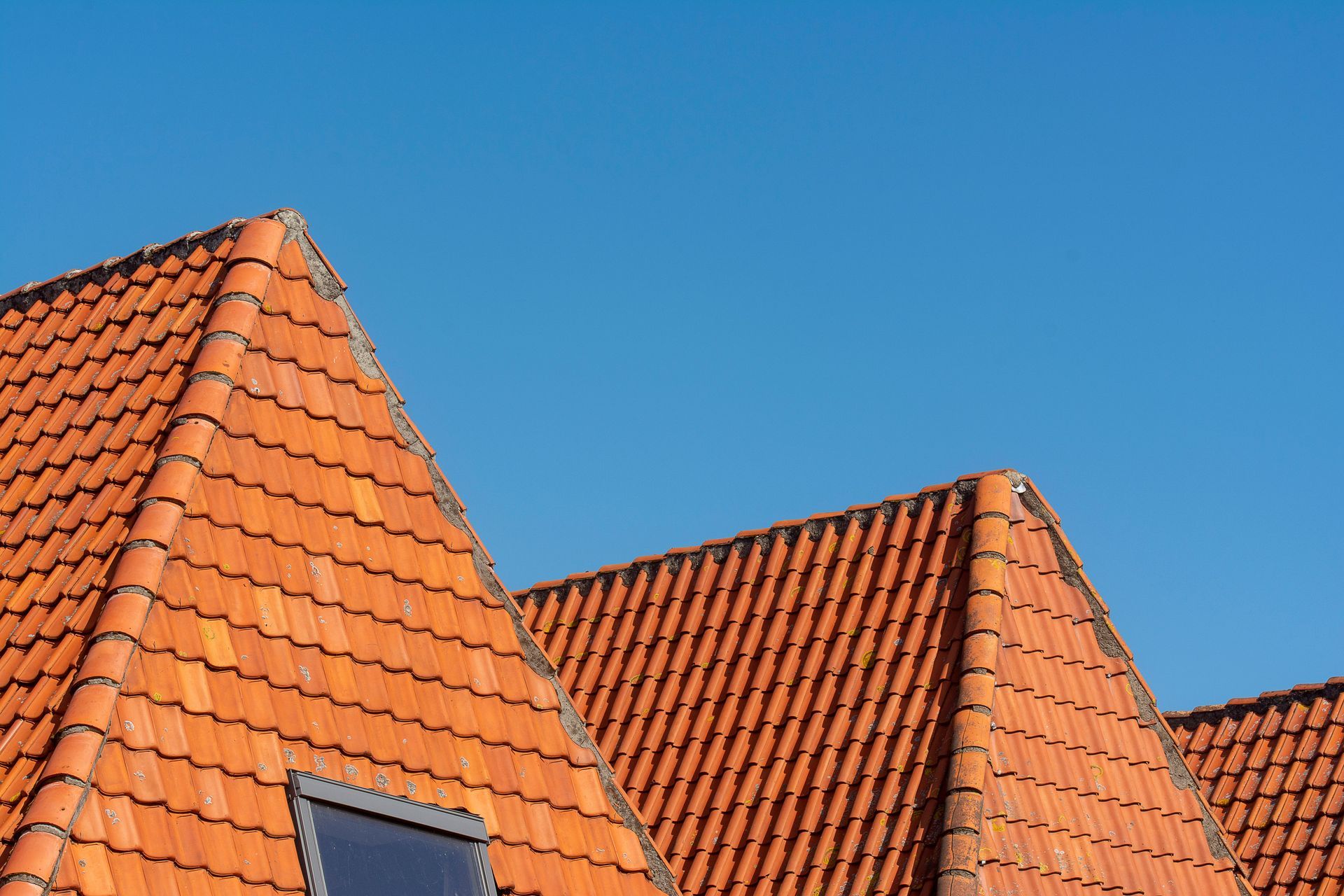
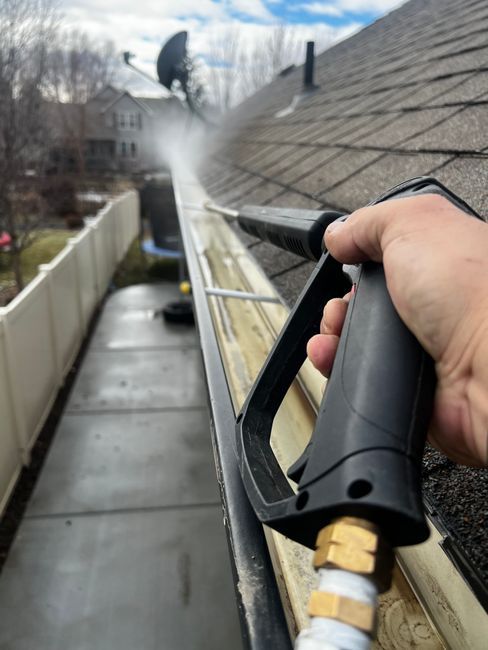
The instinct with a heavily mossed roof is often to reach for a pressure washer, but blasting moss off with high-pressure water can strip the surface of the tile, force water beneath it, and leave the roof looking patchy rather than clean. A soft washing approach, using low pressure combined with a biocide treatment, lifts moss and kills the spores at the root without damaging the tile surface underneath.
Because Sevenoaks has such a mix of tile types, from modern concrete to older hand-made clay, it is worth reading about how clay peg tile roofs need particularly gentle treatment before choosing a method for a period property.
9. Keeping Moss From Coming Back in a Wooded Town
In a town this well shaded, moss removal is rarely a one-off job. Regular gutter cleaning keeps leaf litter from building up in the first place, and periodic soft washing treatments slow regrowth for far longer than a single scrub. Trimming back overhanging branches where possible also helps, letting more light and air reach the roof surface between rainfall.
If you are trying to work out which company to trust with this kind of ongoing care, our guide to choosing a roof cleaner in Sevenoaks covers exactly what to check before booking anyone.
Frequently Asked Questions
Why does my roof have more moss than my neighbour's?
Differences in tree cover, aspect and shade explain most of this. A north-facing roof under overhanging branches will almost always collect more moss than a south-facing roof with a clear, open aspect.
Does Knole Park's tree cover really affect nearby roofs?
Yes. Properties close to large wooded areas like Knole Park tend to sit under more shade and receive more falling leaf litter, both of which encourage faster moss growth on roof tiles.
How often should moss be removed from a roof in Sevenoaks?
This depends on tree cover and aspect, but heavily shaded roofs in wooded parts of the district often need attention more frequently than roofs in more open locations.
What does moss removal typically cost?
Costs vary with roof size, pitch, access and the amount of growth involved, so it is best treated as a site-specific quote rather than a fixed national figure.
Can I remove moss myself with a stiff brush?
Scraping moss off by hand can damage tile surfaces and dislodge tiles, and it does not treat the spores that cause regrowth, so a professional soft washing approach usually gives longer-lasting results.
Will removing moss stop it coming back completely?
Soft washing with a biocide treatment significantly slows regrowth, but in a heavily wooded town like Sevenoaks some degree of ongoing maintenance is normal rather than a sign anything has gone wrong.
Living under Sevenoaks' tree cover and seeing moss build up faster than you'd like? Ben's Roof Cleaning has over 15 years of experience clearing moss and gutters across Sevenoaks' wooded neighbourhoods, from Kippington to the Weald. Get in touch or call 0173 244 1127 for a free, no-obligation quote.
Sevenoaks' Trees Make Moss a Fact of Life, Not a Failure of Maintenance
Sevenoaks' identity as a wooded market town, shaped by Knole Park, the Greensand Ridge and orchards stretching out towards Otford and Dunton Green, is exactly what makes moss such a persistent visitor on local roofs. It is not a sign of neglect. It is simply what happens when steady Kentish rainfall meets heavy shade. Understanding that helps homeowners plan for regular moss removal and gutter clearing as routine maintenance, rather than reacting only once moss has already taken hold.