Does Roof Cleaning Remove Lichen as Well as Moss?
A roof rarely carries just one kind of growth. Moss cushions the shaded slopes, algae films the tiles green or black, and flat, crusty patches of lichen cling on between them. So when homeowners book a clean to deal with the moss, a fair question is whether the lichen goes too, or whether that stubborn, painted-on growth is a separate problem. The answer is that it is removed as well, but it asks a little more of the cleaning process.
This guide explains whether roof cleaning removes lichen along with moss, why lichen is the harder of the two to shift, and what makes the difference in clearing it properly.
Yes, but Lichen Behaves Differently
Professional roof cleaning is designed to remove all the common organic growth on a roof, moss, algae, and lichen together, so a good clean addresses the lichen as well as the moss. The finish you are aiming for is a roof cleared of all three, not just the soft green moss.
The reason lichen deserves its own discussion is that it does not come away as readily as moss and algae. Moss is soft and liftable, and algae is a surface film, but lichen is a tougher, more tenacious organism that anchors physically into the tile. Removing it is entirely possible, but it relies more heavily on the aftercare treatment than moss does, and understanding that sets realistic expectations for how lichen clears.
Why Lichen Is So Stubborn
Lichen is a partnership between a fungus and an alga, and it is the fungal part that makes it cling so hard. The fungus anchors into the microscopic pores and imperfections of the tile surface with root-like structures, so the lichen is physically keyed into the tile rather than simply sitting on top of it like moss.
This is why lichen resists a quick clean in a way moss does not. Lifting the visible growth may leave the deep anchor points behind, and from those anchor points the lichen can re-establish. It is also why scraping lichen is such a poor idea, it tends to take fragments of the tile surface with it and still leaves the anchors. The stubbornness is built into how lichen grips, which means clearing it properly needs more than a single pass of removal.
Tip: If your roof has a lot of crusty, flat, grey or yellow patches that will not brush off, that is lichen, and it is the growth most likely to need biocide aftercare to clear fully. When booking a clean, mention the lichen specifically so the treatment is planned to deal with it, not just the softer moss.
How Lichen Is Cleared Properly
Removing lichen well is a two-part process, and the second part matters most for lichen specifically.
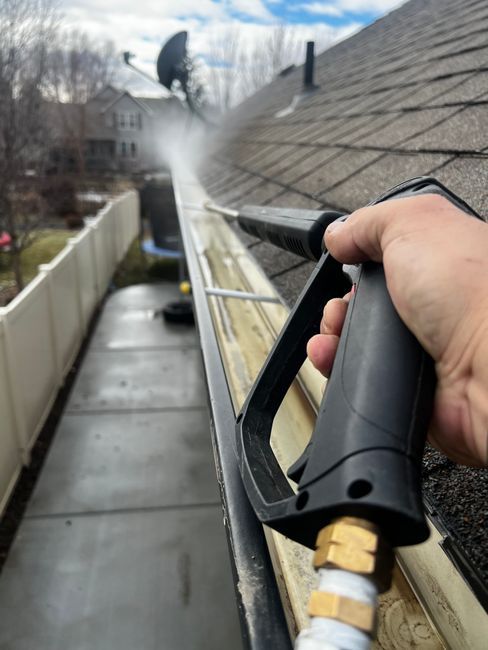
Gentle removal first. A no-contact, water-based clean lifts the bulk of the lichen from the tiles, working from towers or the ground without scraping the surface or blasting it with high pressure. This clears the visible growth without the tile damage that abrasive removal would cause.
Biocide aftercare second. Because lichen's anchor points often survive the initial clean, a non-toxic biocide applied afterwards is what deals with the residue. The biocide keeps working on the surface for months, continuing to break down the remaining lichen and its anchors so it clears more fully and returns more slowly. For lichen, this treatment is close to essential rather than optional.
This combination is why a proper clean handles lichen that a quick blast would not. The removal deals with the bulk, and the biocide finishes the job over time. A Roof Cleaning that includes biocide aftercare is the realistic route to a lichen-free roof. Keeping the roofline clear with Gutter Cleaning reduces the damp conditions lichen thrives in, supporting the result.
Setting the Right Expectations
Because lichen clears more gradually than moss, it helps to expect a timeline rather than an instant result. The moss and algae may look cleared quickly, while the lichen continues to break down and weather off over the weeks after the biocide is applied. A roof that was heavily lichened will keep improving after the cleaning visit, which is the treatment doing its work.
This is normal and is a sign the lichen is being dealt with properly rather than just superficially removed. A patch test and inspection at the start help gauge how established the lichen is and how it will respond, so there are no surprises. In our 15 years on Sussex roofs, lichen is often the growth that has been present longest and takes the most patience to clear, which is exactly why the aftercare treatment is so important with it.
Yes, professional roof cleaning removes lichen as well as moss and algae, but lichen is more stubborn because it anchors deep into the tile surface. A gentle, no-contact clean lifts the bulk of the growth, and a non-toxic biocide applied afterwards is especially important for lichen, as it keeps breaking down the residual growth and anchor points over the following months. Lichen usually needs that combination of removal and treatment to clear properly.
Frequently Asked Questions
Will one clean remove all the lichen from my roof?
A single clean removes the bulk of the lichen, but because lichen anchors deep into the tile, the biocide applied afterwards is what clears the residual growth and anchor points over the following weeks and months. So the lichen is dealt with by the clean plus the treatment together, rather than vanishing entirely on the day. A heavily lichened roof keeps improving after the visit as the biocide works.
Why does lichen come back after I remove it?
Lichen regrows from the anchor points its fungal structures leave in the tile surface, which a quick removal often leaves behind. This is why simply scraping or lifting the visible growth is not enough on its own. A biocide that keeps breaking down those residual anchors is what slows the return, so pairing removal with treatment is the key to keeping lichen from coming straight back.
Is lichen worse for my roof than moss?
They damage tiles differently. Moss holds water against the tiles and drives freeze-thaw cracking, while lichen grips into and slowly etches the tile surface. Neither is simply worse, but lichen is harder to remove and more persistent. Both are worth clearing, and a proper clean deals with them together, using biocide aftercare to handle the stubborn lichen in particular.
Can lichen be removed without damaging the tiles?
Yes, provided it is not scraped or blasted off. A gentle, no-contact clean lifts the lichen without abrading the surface, and the biocide breaks down the rest over time, so the tile is not damaged in the process. Aggressive removal, by contrast, tends to take tile surface with the lichen, which is why the gentle-plus-treatment approach is the safe one.
Should I mention lichen specifically when booking a clean?
It helps to. Flagging lichen means the treatment can be planned to deal with it, since lichen relies on biocide aftercare more than moss does. It also sets realistic expectations about the timeline, as lichen clears more gradually. The inspection and patch test will assess how established it is, but pointing it out ensures it is factored into the plan from the start.
Clear stubborn lichen for good — Book a no-contact clean with biocide aftercare that breaks down lichen over time, not just the moss. Ben's Roof Cleaning includes a free inspection and patch test. Call 0173 244 1127.
Moss, Algae, and Lichen, All Cleared
Roof cleaning does remove lichen as well as moss and algae, but lichen is the stubborn one, anchored deep into the tile in a way the softer growth is not. Clearing it properly takes two steps: a gentle, no-contact removal of the bulk, followed by a non-toxic biocide that keeps breaking down the residue and anchor points over the following months. Expect lichen to clear gradually rather than instantly, and understand that this is the treatment working as it should. With removal and aftercare combined, a roof can be cleared of all three growths and kept that way, lichen included.